
Planning · October 2026
Indian Wedding Ceremonies Explained: Roka to Vidaai, in Order
In short
Most North Indian weddings run roka, then haldi, mehendi and sangeet before the wedding day, then baraat, varmala, kanyadaan and the pheras, then vidaai and the reception. Sikh weddings centre on the Anand Karaj; South Indian weddings follow their own order.
An Indian wedding is not one event. It is a run of ceremonies, each with its own mood, guest list and setting, and families rarely agree on what to call them. This is the order most North Indian weddings follow, with the regional ceremonies we plan most often, and what each one needs from the people planning it.
What are the roka and engagement?
Roka and engagement. The roka is the families' formal yes, usually a small gathering at home or over lunch, with gifts exchanged between both sides. The engagement, or sagai, adds the ring ceremony and is often larger. Many families fix the wedding date with their pandit around this time.
What happens at the haldi?
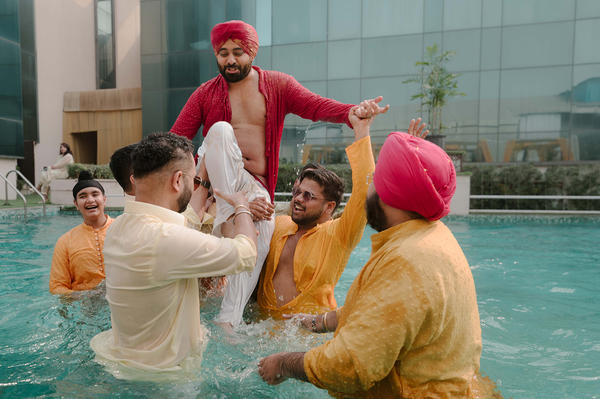
Haldi. Family members apply turmeric paste to the bride and groom as a blessing, traditionally on the morning of the wedding or the day before. It is daytime, informal and joyful. Turmeric stains linen, marble and camera gear, so build the décor and outfits for it.
What is the mehendi?
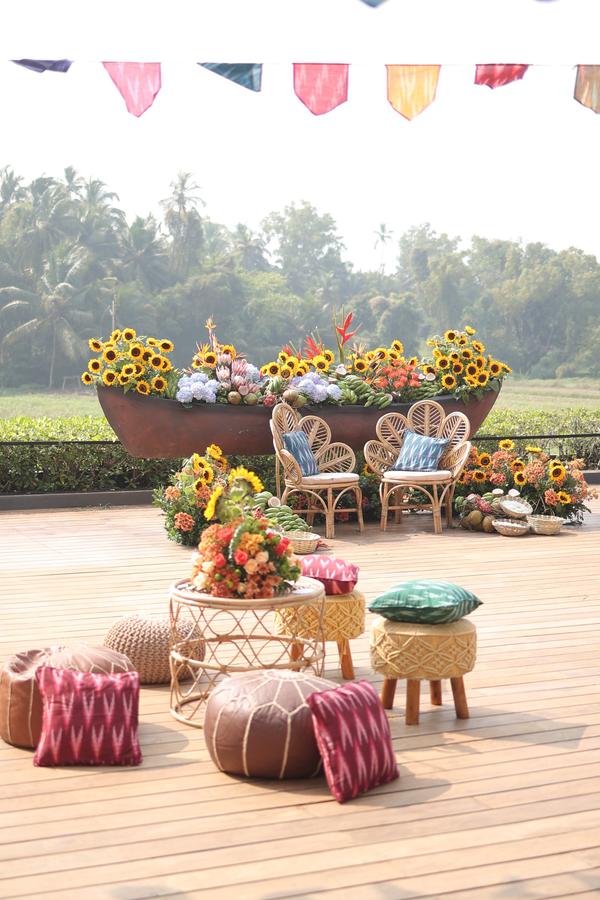
Mehendi. Henna is applied to the bride's hands and feet, and to guests who want it, over an afternoon of music and food. The bride's design can take several hours, so the artist team, seating and shade decide how the day feels.
What is a sangeet?
Sangeet. Sangeet means music. It is the evening when both families sing, dance and perform for each other. It began as a small gathering of the women of the family; today it is often the most produced night of the wedding, with choreographed performances, a stage and live acts.
What is the baraat?
Baraat. The groom's procession to the wedding venue, on horseback, in a decorated car or on foot, with dhol and dancing family. It almost always runs long: plan for 45 to 75 minutes and check the venue's rules on horses, fireworks and road access.
What are the milni and varmala?
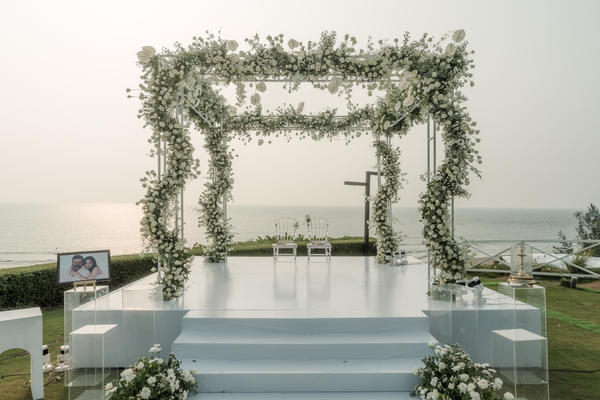
Milni and varmala. In Punjabi weddings the milni comes first: elders of both families meet and embrace, relation by relation. Then the couple exchange flower garlands at the varmala, or jaimala, usually on a raised stage so everyone can see.
What are kanyadaan and the pheras?
Kanyadaan and the pheras. In the Hindu ceremony the bride's parents give her hand in marriage, and the couple walk around the sacred fire as the pandit recites the vows. Most North Indian weddings take seven pheras; some communities take four. The marriage is complete when the last phera ends. The timing follows the muhurat, so it can fall late at night.
What is the Anand Karaj?
Anand Karaj. The Sikh wedding is held in the presence of the Guru Granth Sahib, usually in the morning. The couple walk around it four times as each of the four laavan is read and sung. It is simple and quiet, and the timings at the gurdwara are fixed, so the rest of the day is planned around it.
What is the vidaai?
Vidaai. The bride's farewell to her family's home. It is the most emotional moment of the wedding and is often squeezed in after a ceremony that ran late. Give it real time in the schedule and keep it private if the family wants that.
When is the reception?
Reception. The couple's first party as a married pair, usually hosted by the groom's family for a wider circle of friends, colleagues and relatives. It can be the same night, the next day, or weeks later in another city.
What about South Indian ceremonies?
South Indian and other regional ceremonies follow their own order. A Telugu wedding begins with the pelli kuthuru, the bride's blessing ceremony; a Tamil wedding centres on the tying of the thali. Ask both families early which rituals matter to them, because that list, not a template, decides how many days and spaces you need.
| Ceremony | When | What happens |
|---|---|---|
| Roka and engagement | Months before | Families' formal yes; rings exchanged |
| Haldi | Morning of the wedding or the day before | Turmeric paste applied as a blessing |
| Mehendi | A day or two before | Henna for the bride and guests |
| Sangeet | Evening before, or close to it | Families sing, dance and perform |
| Baraat | Wedding day | Groom's procession; plan 45 to 75 minutes |
| Varmala | Wedding day | Couple exchange garlands |
| Pheras | At the muhurat | Couple walk around the sacred fire |
| Anand Karaj | Morning, Sikh weddings | Four laavan around the Guru Granth Sahib |
| Vidaai | After the ceremony | The bride's farewell |
| Reception | Same night or later | The couple's first party as a married pair |
Common questions
What is the order of ceremonies in an Indian wedding?+
In most North Indian Hindu weddings: roka or engagement, then haldi, mehendi and sangeet in the days before, then the baraat, varmala, kanyadaan and pheras on the wedding day, then vidaai, with the reception after. Families reorder the pre-wedding days to suit travel and the muhurat.
What is a sangeet?+
Sangeet means music. It is the evening before the wedding, or close to it, when both families sing, dance and perform for each other. It began as a small gathering of the women of the family and is now often the most produced night of the wedding.
What happens at a haldi ceremony?+
Family members apply a paste of turmeric to the bride and groom, usually in separate homes or spaces, as a blessing before the wedding. It is a daytime, informal ceremony, and the turmeric stains everything it touches, so plan clothes and décor that can take it.
What is the difference between the pheras and the Anand Karaj?+
The pheras are the Hindu ceremony in which the couple walks around the sacred fire, seven times in most North Indian weddings. The Anand Karaj is the Sikh ceremony, held in the presence of the Guru Granth Sahib, in which the couple walks around it four times as the four laavan are recited.
How many days does an Indian wedding last?+
Most families celebrate across two to four days, with the pre-wedding functions on the days before the wedding and the reception on the day of the wedding or soon after. Destination weddings usually fit everything into two or three days, because guests are travelling.