
Destination · November 2026
Getting Married in India as a Foreigner: The Law, the Paperwork and the Visa
In short
Yes. Any two adults, whatever their nationality or religion, can marry in India under the Special Marriage Act 1954. One of you must have lived in the district for 30 days before giving notice, the notice runs for 30 days, and you then sign before the Marriage Officer and three witnesses, so allow about two months. A foreign partner also brings proof of single status from their embassy.
Foreigners can marry in India, and the law is more open than most couples expect. The Special Marriage Act 1954 lets any two people marry, whatever their nationality or faith, if neither has a living spouse, the man is at least 21 and the woman at least 18, both can give valid consent and they are not within the prohibited degrees of relationship (section 4). That covers two foreigners, a foreigner and an Indian citizen, and two Indian citizens who live abroad. The one exception is Jammu and Kashmir, where section 4(e) requires both partners to be citizens of India. Religious law offers other routes, but only to couples who share the right faith.
Which law fits your couple
Which law applies depends on who you are, not where you live. If both of you are Hindu, Buddhist, Jain or Sikh by religion, the Hindu Marriage Act 1955 applies (section 2), and the ceremony itself makes the marriage: where the rites include the saptapadi, the seven steps taken together before the sacred fire, it becomes binding at the seventh step (section 7). If one or both of you are Christian, the Indian Christian Marriage Act 1872 governs, and section 4 makes such a marriage void unless it follows the Act. Muslim couples marry by nikah, the marriage contract, under personal law. The US Embassy in India advises couples of different religions to register under the Special Marriage Act even after a religious ceremony.
The civil route, step by step
The civil route has four steps. First, one of you must have lived in the district for at least 30 days immediately before giving notice, which is the residence rule in section 5, and the notice goes to that district's Marriage Officer, usually the SDM or Sub-Registrar. Second, the officer enters it in the Marriage Notice Book, which anyone may inspect free of charge (section 6), and objections can be raised for 30 days (section 7). Third, you, your partner and three witnesses sign a declaration before the officer (section 11), and each of you says the words in section 12, taking the other as lawful spouse. Fourth, the certificate is entered and is conclusive evidence of the marriage (section 13).
Budget the calendar before the venue. Under the Special Marriage Act the shortest path is about two months in India: 30 days of residence, then a 30-day notice, then the signing. A notice lapses if you do not marry within three calendar months of giving it, so you would start again (section 14). A Hindu, Buddhist, Jain or Sikh couple can hold the ceremony and register it under the Hindu Marriage Act within days; Delhi issues the certificate on the appointment date. Allow extra weeks at home for embassy affidavits, apostilles and translations, and book flights only once the registrar has confirmed the checklist and an appointment.
| Who is marrying | Which law | Where to register | Typical time |
|---|---|---|---|
| Two foreigners, any faith or mixed faiths | Special Marriage Act 1954 | Marriage Officer (SDM or Sub-Registrar) of a district where one of you has lived 30 days | About two months in India: 30 days' residence, then 30 days' notice |
| Foreigner and Indian citizen of different faiths | Special Marriage Act 1954 | Marriage Officer of the district where either of you has lived 30 days | About two months; the foreign partner brings proof of single status |
| Two Hindus, Buddhists, Jains or Sikhs, any nationality | Hindu Marriage Act 1955: the ceremony makes the marriage | State marriage registrar where either of you lives, after the ceremony | Days: Delhi issues the certificate on the appointment date |
| One or both partners Christian | Indian Christian Marriage Act 1872 | Licensed minister or Marriage Registrar under the Act | Notice to the minister first; ask the church for its timetable |
| Two Muslims | Muslim personal law (nikah) | Nikahnama issued at the ceremony; state registration where required | The ceremony day; the nikahnama is generally accepted as proof |
| Indian citizen living abroad, with an Indian or foreign partner | Foreign Marriage Act 1969 | Indian embassy or consulate in the country where one of you has lived 30 days | About two months: 30 days' residence, then 30 days' notice |
| Same-sex couple, any nationality | No route in India (Supreme Court, October 2023) | None | A ceremony is possible but has no legal effect |
Documents and the no-objection letter
Registrars set their own checklists, so treat any list as a starting point. Expect passports with valid visas, proof of address for the partner who meets the 30-day residence rule, proof of age, passport photographs and, for anyone married before, the divorce decree or the late spouse's death certificate. A foreign partner is usually asked for a no-objection letter, which in practice means proof of single status. The US Embassy in India says Americans can meet this request with a notarised affidavit of marital status made at an embassy or consulate appointment. Britain and Australia issue certificates of no impediment, and Canada issues a statement in lieu of one. Three witnesses attend in person with identity proof.
Which visa to travel on
No visa is labelled for weddings, so read the rules exactly. India's e-Visa page lists the e-Tourist visa for recreation, sightseeing and casual visits to friends and relatives. It neither lists nor forbids a wedding, so if the marriage is the main reason for your trip, ask the Indian mission before you apply. Registration is the harder part. The one-month e-Tourist visa allows 30 days and cannot be extended, which is too short for 30 days of residence plus a 30-day notice. The one-year and five-year versions allow up to 180 days in a calendar year. Every e-Visa is non-extendable and non-convertible, so a spouse who plans to stay on must arrange a different visa before travelling.
Indians abroad and the Foreign Marriage Act
Indian citizens who live abroad have a third option. The Foreign Marriage Act 1969 lets a Marriage Officer at an Indian embassy or consulate solemnise a marriage where at least one partner is a citizen of India (section 4). It mirrors the civil route at home: one of you must have lived in that consular district for 30 days before giving notice (section 5), the notice is published at the mission and in India (section 7), objections run for 30 days, and the parties sign before three witnesses (section 12). Section 17 also lets a mission register a marriage already made under local law. A mission may refuse if the host country's law forbids the marriage (section 11).
Will the marriage count back home
A marriage validly made in India is generally recognised abroad, but each country applies its own test. Britain recognises a foreign marriage if it was lawful where it took place and would be allowed under UK law, and it does not issue a UK certificate for it. Australia recognises most overseas marriages on the same two tests but cannot register them. Canada says marriages legally performed abroad are usually valid there and need no registration. The US State Department sends couples to the attorney general of their home state. Before you use an Indian certificate overseas, have it apostilled by the Ministry of External Affairs, which India has offered since joining the Hague Convention in 2005, for a ₹50 government fee plus a service charge.
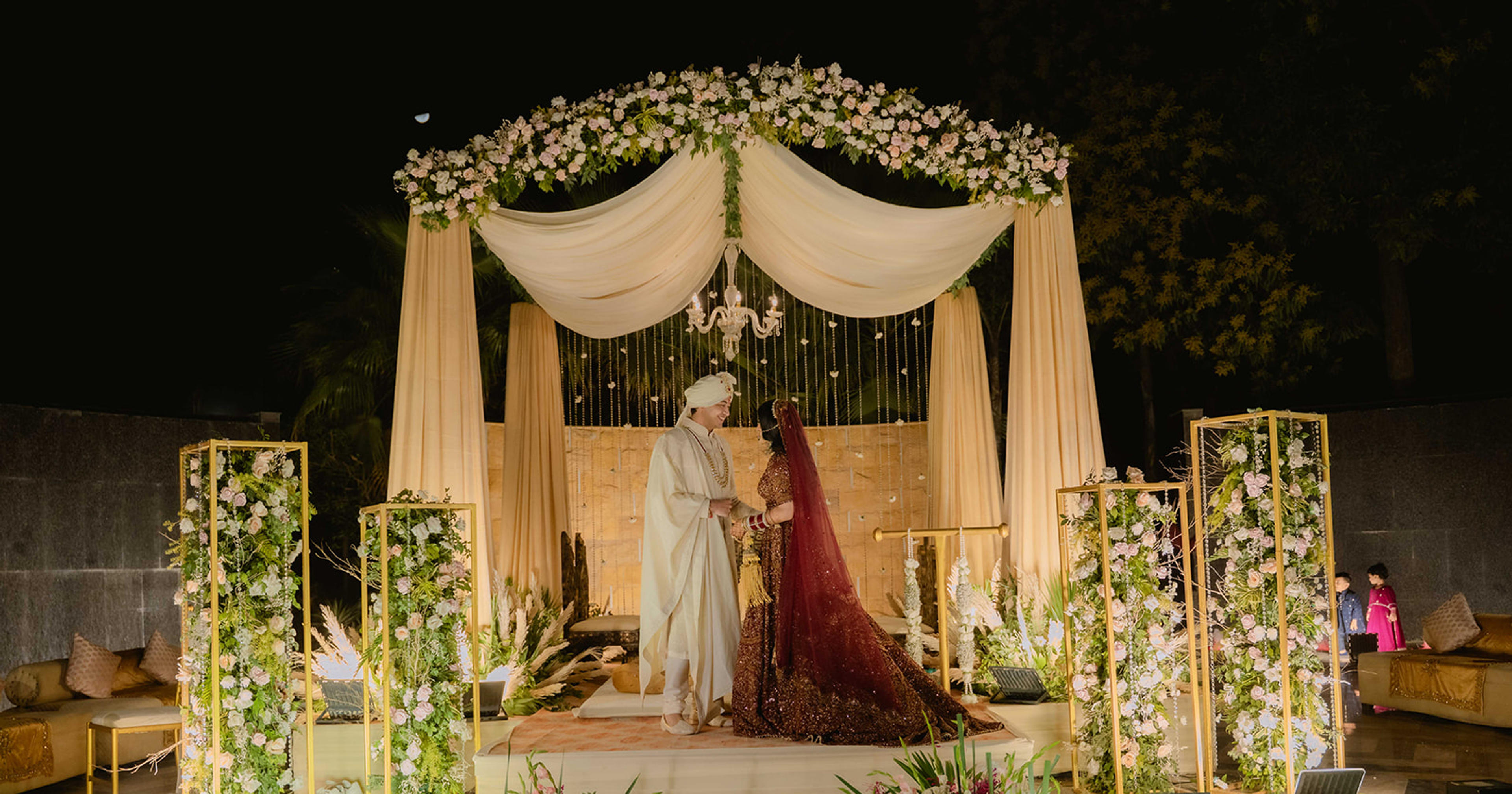
Many couples from abroad separate the two jobs. They complete the legal marriage at home, at a register office or a city hall, and hold the full wedding in India: the haldi, the turmeric ritual, the mehndi, the henna evening, the sangeet, the music night, and then the pheras, the circling of the sacred fire, as the ceremony that matters to the family. The US State Department suggests this for destination weddings because it avoids a foreign marriage certificate and local rules. At the weddings we plan in Goa and Rajasthan, couples who take this route keep every Indian ritual intact and carry no paperwork through the wedding week.
Same-sex couples
India does not legally recognise same-sex marriage. On 17 October 2023 a five-judge bench of the Supreme Court held that the question belongs to Parliament and that there is no fundamental right to marry, declining to read the Special Marriage Act to include same-sex couples, and in January 2025 the court dismissed petitions seeking a review. No Indian registrar can therefore issue a marriage certificate to a same-sex couple, Indian or foreign. A ceremony or blessing with no legal effect is still possible, and couples from countries that allow same-sex marriage can marry legally at home and celebrate in India. Canada's travel guidance also notes that many countries do not recognise such marriages, so check both ends before you plan.
Common questions
What are the procedures and documents needed to marry a foreigner in India?+
Most couples use the Special Marriage Act 1954. One of you lives 30 days in the district, you both give written notice to the Marriage Officer, wait 30 days for objections, then sign before three witnesses. Bring passports and visas, address proof for the resident partner, photographs, proof of age, any divorce decree and the foreign partner's proof of single status. Confirm the district's checklist with the registrar.
Can two foreigners of the same religion get married in India?+
Yes. If both are Hindu, Buddhist, Jain or Sikh, the Hindu Marriage Act 1955 applies by religion, so the ceremony makes the marriage and you register it afterwards. Two Christians marry under the Indian Christian Marriage Act 1872 and two Muslims by nikah, the marriage contract. Any couple can instead use the Special Marriage Act, which needs 30 days' residence and 30 days' notice. Check the registrar's document list first.
Can foreigners legally marry in India?+
Yes. Section 4 of the Special Marriage Act 1954 allows a marriage between any two persons who meet its conditions, with no citizenship test except in Jammu and Kashmir. The man must be 21 and the woman 18, neither may have a living spouse, and one must have lived 30 days in the district before notice. The certificate is conclusive evidence under section 13. Confirm local requirements with the Marriage Officer.
Can a foreigner get married in India on a tourist visa?+
Our sources do not say a ceremony breaks the visa: India's e-Visa page lists recreation and visits to friends and relatives, and neither lists nor forbids a wedding. Registration is the constraint. The 30-day e-Tourist visa cannot be extended and is too short for 30 days' residence plus 30 days' notice; the one-year and five-year versions allow 180 days a year. Ask the Indian mission if marriage is your main purpose.
What is the no-objection certificate a foreigner needs to marry an Indian citizen?+
It is proof from the foreign partner's own country that they are free to marry. The US Embassy in India meets the request with a notarised affidavit of marital status, made at an embassy or consulate appointment with your passport. Britain and Australia issue certificates of no impediment, and Canada a statement in lieu of one. Where the embassy issues none, an apostilled single-status declaration is used. Ask your registrar what it accepts.
If an Indian marries a foreigner in India, will the marriage be recognised in the foreign country?+
Usually, yes, under that country's own tests. Britain recognises it if it was lawful in India and would be allowed under UK law; Australia applies the same two tests; Canada says such marriages are usually valid without registration; in the US, the state attorney general decides. None of the four reissues a local certificate. Apostille the Indian certificate through the Ministry of External Affairs before using it abroad.
Do I need to register my marriage in India if I got married abroad?+
No, it is not needed for validity. A marriage lawfully made abroad is recognised in India once its certificate is apostilled or attested. Under section 17 of the Foreign Marriage Act 1969, an Indian citizen can also ask the Indian mission in that country to register it. Many couples still register in India because banks, passport offices and visa officers prefer an Indian certificate. Ask the mission for its documents and fee.
Can I register my marriage anywhere in India?+
No. Under section 5 of the Special Marriage Act you give notice in a district where at least one of you has lived for the 30 days immediately before. A Hindu, Buddhist, Jain or Sikh wedding is registered under state rules with the registrar where either of you lives. Goa is a special case: non-resident couples hold the ceremony there and register at home. Check your state's registration portal before you book.
What is the Special Marriage Act?+
It is India's civil marriage law of 1954, open to any two adults regardless of religion or nationality. The couple give notice to a district Marriage Officer, wait 30 days for objections, then sign a declaration before three witnesses and say the words set out in section 12. No priest or religious ceremony is needed, and the certificate under section 13 is conclusive proof. Confirm local procedure with your district office.
Can Indians living abroad get married at the Indian embassy?+
Yes, if at least one partner is an Indian citizen. Under the Foreign Marriage Act 1969, a Marriage Officer at an Indian embassy or consulate can solemnise the marriage once one of you has lived 30 days in that consular district and the notice has run for 30 days. The parties sign before three witnesses. A mission may refuse if local law forbids the marriage. Check the mission's own checklist.
Can a same-sex couple get married in India?+
Not legally. On 17 October 2023 the Supreme Court declined to read the Special Marriage Act to cover same-sex couples and left the question to Parliament, and it dismissed review petitions in January 2025. No registrar can issue a certificate. A celebration or blessing with no legal effect is still possible, and couples from countries that allow same-sex marriage can marry legally at home first.
How long does it take for a foreigner to get married in India?+
About two months under the Special Marriage Act: 30 days of residence in the district, a 30-day notice period, then the signing, which must happen within three calendar months of the notice or you start again. A religious wedding for two Hindus, Sikhs, Jains or Buddhists is quicker, because the ceremony makes the marriage and registration follows. Add weeks for embassy affidavits and apostilles. Confirm with the registrar.
What is the easiest way for a foreign couple to have a wedding in India?+
Marry legally at home and hold the wedding celebration in India. The US State Department suggests this for destination weddings because it avoids a foreign marriage certificate and local marriage rules. You keep every ritual, from the haldi to the pheras, and the legal step follows your home country's notice rules. Couples who want an Indian certificate should allow about two months in India under the Special Marriage Act.