Guests · November 2026
What to Expect at an Indian Wedding: A First-Time Guest's Guide, Function by Function
In short
An Indian wedding usually runs two to four days of separate functions: haldi, mehndi and sangeet first, then the baraat, a ceremony of 45 minutes to three hours, and a reception. You need not attend everything, but do attend the ceremony and reception. Be on time for the rites, take your shoes off at the mandap, dance when asked, and check the invitation for plus-ones and children.
An Indian wedding is not one event but a run of functions, and the invitation reads more like an itinerary than a card. Most families celebrate over two to four days: the haldi, mehndi and sangeet in the days before, then the baraat, the ceremony and a reception, which may fall the same night or the next. Destination weddings compress it all into two or three days because everyone is travelling. You will often be asked to RSVP to each function separately, and some, usually the haldi, are kept for close family. What follows walks through each function as a first-time guest will meet it, whether you are flying in from abroad or from another community.
Haldi and mehndi, the daytime functions
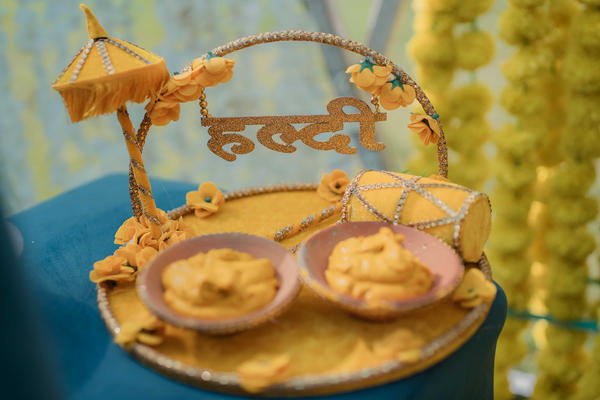
The haldi, the turmeric blessing before the wedding, is a daytime ritual in which family members rub a paste of turmeric on the bride and groom, usually in separate homes or spaces. It is informal and messy: guests often get splashed, and turmeric can tint lighter skin yellow for a while, so wear cotton you do not mind staining. The mehndi, the henna gathering, comes a day or two before the wedding. The bride's own henna can take five hours or more, so she is often finished before guests arrive, and female guests usually get a smaller design on their hands. The whole family is now often invited.
The sangeet
The sangeet, the night of music and dance, is usually held one or two evenings before the wedding, and most modern sangeets run four to five hours. It began as a gathering of the women of both families singing folk songs to tease and bless the bride, and it is now often the most produced night of the week. Family members perform choreographed routines to film songs, the couple may take the stage themselves, and then the floor opens to everyone. If someone pulls you in to dance, go; nobody is grading the steps. Guests do not usually bring gifts to the sangeet, as gifts are given at the wedding or reception.
The baraat: dancing the groom in
The baraat, the groom's procession to the venue, opens the wedding day in most North Indian families. The groom arrives on a decorated horse, in a car or on something more theatrical, surrounded by his family and friends dancing to a dhol, the double-headed Indian drum, or a band. Traditionally it is the groom's side alone, while the bride's family waits at the entrance to receive them, but many couples now invite every guest to join. When the procession reaches the bride's side, they join the dancing to welcome the groom. Plan for 45 to 75 minutes on your feet, often outdoors, before the welcome rituals at the door.
The ceremony and the reception
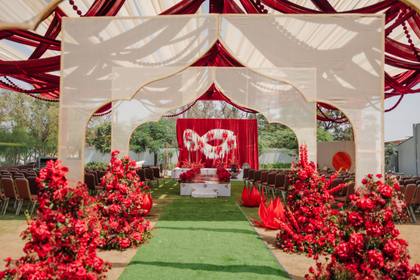
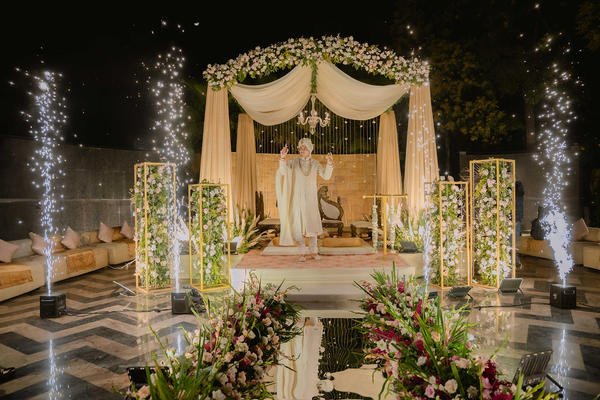
The ceremony takes place under the mandap, the four-pillared canopy over the sacred fire. The couple exchange garlands in the varmala, the bride's parents place her hand in the groom's in the kanyadaan, and the couple circle the fire in the pheras, after which they are married. Depending on the community and the priest, it lasts anywhere from 45 minutes to three hours, much of it chanted in Sanskrit. Guests sit around the mandap rather than in it, stay quiet during the prayers, and come forward at the end to shower the couple with flower petals and blessings.
The reception is the most relaxed function and often the longest night: the couple's entry, a stage where guests go up to congratulate them and be photographed, a long dinner and dancing that runs late. There can be a gap of three hours or more between a daytime ceremony and the evening reception, so pace yourself and use it to rest or change. If the party is outdoors, India's noise rules bar loudspeakers in the open between 10 pm and 6 am, so late dancing usually moves into a hall. Dress up: this is the night for the most formal outfit you brought.
| Function | What happens | How long | What to wear |
|---|---|---|---|
| Haldi | Turmeric paste applied to the couple; often close family only | A daytime session | Yellow or marigold cotton you can stain |
| Mehndi | Henna for the bride and female guests, music, a meal | An afternoon; the bride's henna alone takes 5 hours or more | Greens, florals, short or loose sleeves |
| Sangeet | Family dance performances, then an open dance floor | 4 to 5 hours, an evening | Sequins, metallics, mirror work; shoes to dance in |
| Baraat | Groom's procession with drums and dancing | 45 to 75 minutes | Your ceremony outfit, comfortable shoes |
| Ceremony | Garlands, kanyadaan and the pheras around the fire | 45 minutes to 3 hours | Rich silks, a lehenga or saree; sherwani or bandhgala |
| Reception | Couple's entry, stage greetings, dinner, dancing | An evening that runs late | Gowns, cocktail sarees; a suit or Indo-western jacket |
Do you have to attend everything?
You do not have to attend every function you are invited to. Etiquette writers agree it is fine to skip one or two, as long as you come to the ceremony and the reception; what reads badly is missing every family ritual and appearing only for the party. Be on time for anything religious. The ceremony runs to a muhurat, the auspicious time set by the priest, and it will not wait for latecomers, while walking in mid-prayer is the one lateness families notice. Parties often warm up slowly, but at a destination wedding the coaches and transfers leave on schedule.
Shoes, head covering, food and alcohol
Shoes come off for the mandap and for any gurdwara or mosque, so wear a pair that slips on and off easily. In a gurdwara everyone covers their head; at a Hindu ceremony, women cover theirs only if they see others doing so. Food is the heart of Indian hospitality, and some meals, every gurdwara langar and many South Indian feasts among them, are entirely vegetarian. Alcohol depends on the family, its faith and the state: gurdwaras allow none on the premises, most Muslim weddings are dry, and Bihar, Gujarat, Nagaland, Mizoram and Lakshadweep ban its sale. Where there is a bar, it belongs to the sangeet or reception, never the ceremony.
Bridal parties, guest lists and plus-ones
There are no bridesmaids or groomsmen in the ritual sense. The bride's sisters, cousins and friends lead the sangeet and steal the groom's shoes for a ransom in the joota chupai, the shoe-stealing game, while his brothers and friends lead the baraat; many couples now name a bridal party for the dances and photographs. Guest lists are long because a wedding joins two families. Extended relatives, the parents' friends and colleagues and the couple's own friends all expect to be asked, and planners treat at least 100 guests as normal. Bring a partner or children only if the invitation names them, and ask before you RSVP if unsure.
Keep your phone in your pocket during the prayers and the pheras, and leave the aisle to the photographers the family has hired; photograph freely at the sangeet, the baraat and the reception, and ask before posting the rituals. Avoid bridal red, all-white and all-black, never step onto the mandap in shoes, and give cash in an amount ending in 1, such as ₹1,101 or $101, rather than a round figure. At the destination weddings we plan, every guest receives a travel note with each function's time, place and dress code, and it answers most of these questions before they are asked.
Common questions
How long is a Hindu wedding ceremony?+
Anywhere from 45 minutes to three hours, depending on the community, the priest and how many rites the family keeps. The heart of it is the pheras, the circuits of the sacred fire, and the couple is married when they end. Much of it is chanted in Sanskrit. Guests sit around the mandap, the wedding canopy, and stay quiet during the prayers and the pheras.
Do I have to attend every function at an Indian wedding?+
No. Etiquette writers agree you may skip a function or two as long as you attend the wedding ceremony and the reception, and RSVP to each event separately. What reads badly is missing every family ritual and appearing only for the reception. Some functions, often the haldi, are kept for close family, so attend only those named on your invitation.
Should I arrive on time to an Indian wedding?+
Yes, for anything religious. The ceremony runs to a muhurat, the auspicious time set by the priest, and it does not wait; walking in mid-prayer is the lateness families notice. Parties such as the sangeet and reception often warm up slowly, but arriving at the printed time is still polite, and at destination weddings the transfers leave on schedule.
Who attends the baraat, and can guests join?+
Traditionally the baraat, the groom's procession to the venue, is his family and friends, while the bride's side waits to welcome them. Many couples now open it to every guest, and when it reaches the entrance the bride's side joins the dancing. It usually lasts 45 to 75 minutes, often outdoors, so wear shoes you can dance in on a road or lawn.
Do Indian weddings serve alcohol?+
Some do and many do not; it depends on the family, its faith and the state. Gurdwaras allow no alcohol or tobacco on the premises, most Muslim weddings serve a halal menu without alcohol, and Bihar, Gujarat, Nagaland, Mizoram and Lakshadweep ban its sale. Where a bar exists, it is at the sangeet or reception, never the ceremony. Follow the hosts' lead.
Do Indian weddings have groomsmen?+
Not as a formal role. The groom's brothers, cousins and friends play the part: they lead the dancing in the baraat, stay at his side through the ceremony and bargain with the bride's sisters to recover his shoes in the joota chupai, the shoe-stealing game. Many urban and diaspora couples now name groomsmen for the sangeet dances and photographs, but they have no ritual role.
How many guests are typical at an Indian wedding?+
Usually several hundred, though no national survey counts them. Planners describe Indian weddings as large events with at least 100 guests, and a Hindu priest's guide for families in North America puts the usual range at 200 to 500. Destination weddings tend to run smaller, because every guest needs a room, a flight and a seat on the transfers.
Why are Indian wedding guest lists so large?+
Because a wedding joins two families, not just two people. Extended relatives, the parents' friends and colleagues, neighbours and the couple's own friends all expect an invitation, and leaving out an aunt or an old family friend can be felt for years. Hospitality matters too: running short of food is seen as poor hosting, so families plan generously for everyone.
Can I bring a plus-one or children to an Indian wedding?+
Only if the invitation includes them. If the card names your household or family, children are welcome; if it names you alone, come alone. When unsure, ask the person who invited you before you RSVP rather than at the door, because seating, meals, rooms and transfers are counted per head, especially at a destination wedding.
Can I take photos during an Indian wedding ceremony?+
Keep your phone away during the prayers and the pheras, and leave the aisle and the mandap to the photographers the family has hired. Photos are welcome at the sangeet, the baraat and the reception. Before posting pictures of the rituals or of the bride before her entrance, ask the couple or wait until they share their own.
What should you not do at an Indian wedding?+
Do not wear bridal red, all-white or all-black, step onto the mandap in shoes, or talk and use your phone during the prayers. Do not skip every ritual and appear only for the reception. Never carry alcohol or tobacco into a gurdwara. And do not give a round sum: cash gifts end in 1, such as ₹1,101 or $101.
Do guests take their shoes off at an Indian wedding?+
Only in sacred spaces. At a Hindu wedding, nobody steps onto the mandap, the canopy over the sacred fire, in shoes. At a gurdwara everyone removes their shoes before entering the hall, and mosques ask the same. The lawns, the dance floor and the dinner are shoes-on, so wear a pair that slips off and on easily.
Do Indian families pay for guests' hotels and flights?+
Often for rooms and meals, rarely for flights, and it varies. The traditional expectation is that the host family looks after guests from arrival to departure, including accommodation and transfers. At many destination weddings the hosts now cover every meal, function and transfer while guests pay for their own rooms at a negotiated group rate. The invitation or travel note will say which applies.